

AC vs DC charging: the difference and how long an EV takes to charge
AC stations suit long stops, DC stations suit a short break on the road. Examples of how to estimate charging time.
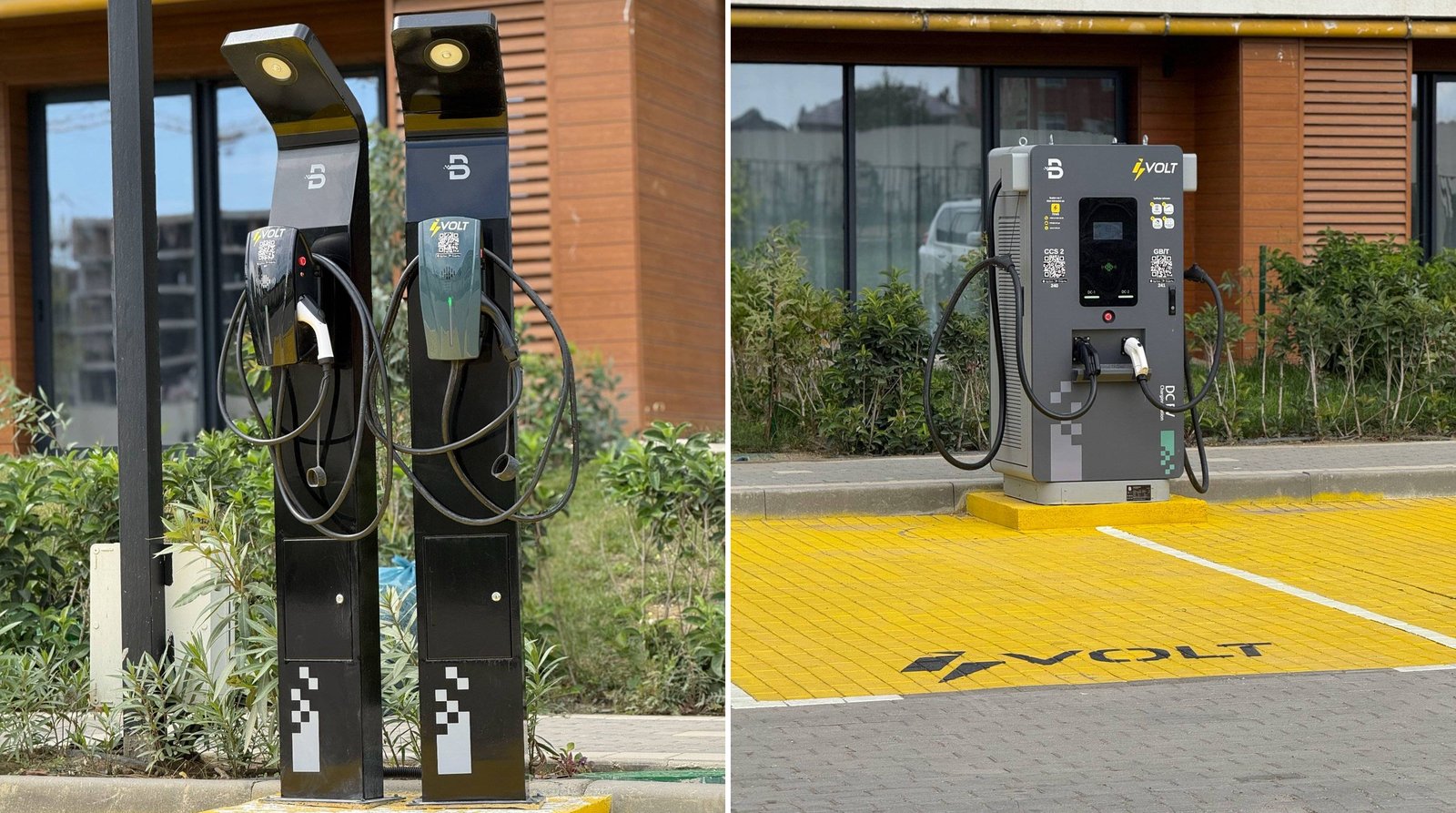
Charging stations come in two kinds: AC (alternating current) and DC (direct current). The difference is speed.
AC charging — when the car stays parked
An AC station feeds the car's on-board charger, and that charger fills the battery. In the iVOLT network AC stations deliver 7.4 kW and 22 kW. They suit places where the car stands for a few hours: a hotel, an office, a shopping centre, a restaurant.
DC charging — a short break on the road
A DC station sends energy straight into the battery, so it is much faster. In the iVOLT network DC stations range from 20 kW to 180 kW; 60 kW and 120 kW are the most common.
How to estimate charging time
A simple formula: energy needed (kWh) ÷ charging power (kW) = time (hours). For example, taking a 60 kWh battery from 20% to 80% needs 36 kWh:
- at a 7.4 kW AC station — about 5 hours
- at a 22 kW AC station — about 1 hour 40 minutes (if the car accepts that power)
- at a 60 kW DC station — about 40 minutes
- at a 120 kW DC station — about 20–25 minutes (if the car accepts that power)
What the real time depends on
- The maximum power your car accepts. Many cars take no more than 7–11 kW from AC, so they charge slower even at a 22 kW station.
- The battery level. Above 80% fast charging slows down to protect the battery, so on the road it usually pays to charge to 80%.
- The temperature of the battery and the air.
Which to choose
For everyday use — while the car is parked anyway — AC charging is convenient. On a long trip or when time is short, choose a DC station. The power of every station is shown in the list on the website and in the app:
ivolt.az/en/stations